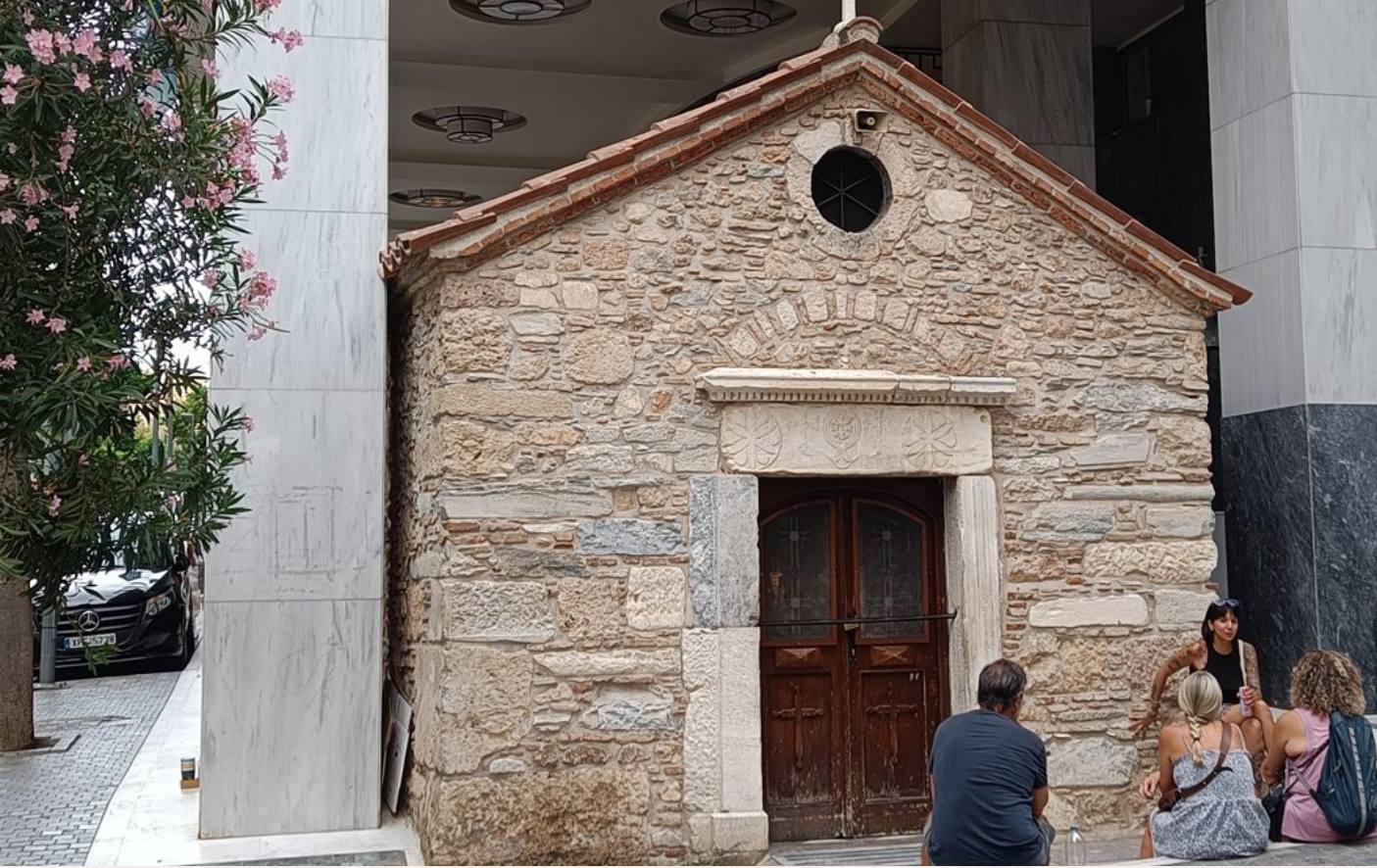

about this reading
Roughly a third of Greece lives in the Athens region. What is true of this city is close to true of the country.
The financial crisis ran most of a decade and cost around a quarter of the economy. Few developed countries have lost that much outside a war. The recovery is about five years old.
Greece is being presented as a comeback story. Growth is back, tourism has passed its pre-crisis numbers, investment is arriving.
I went to find out whether the comeback reaches the kitchen table. The street. The worker. The older person. The small entrepreneur. The young Athenian trying to build a life.
This is the short version. Five signals out of three weeks of conversations – the five that came up most often, and the ones that sat on two or three of the 17 Living Goals at once. Where Athens sits on each of the seventeen, the evidence behind every signal, and the questions I could not answer are in the Athens City Report.
A signal is not a problem to solve. It is not a conclusion either. It is a pattern that kept coming back, and it explains part of how life here is actually lived.
Rather than asking whether Athens is a good or bad place to live, this reading asks a different question:
What is Athens telling us about quality of life?
The seventeen. This reading uses the 17 Living Goals – seventeen plain directions for what a good life needs, grouped as Live Good, Work Good, Feel Good, Do Good. No targets and no score. One question, asked seventeen ways: does this make life better to live? Each signal opens by naming the goals it sits on. The full list is at businesshippie.club/the17livinggoals.
how I work
I run the Quality of Life Tour, visiting city after city with the same method and the same seventeen questions. This time, Athens. This is field research, not market research. Nobody was surveyed and nothing was sampled. It is one city, read from the outside, in real life.
Observation. Streets, neighbourhoods, venues – the details that quietly say how life is lived there.
Conversations. Coffeetalks, mostly. One person, one conversation, no script and no questionnaire. That is deliberate: a survey can only give back the questions you arrived with. Not one of these five signals would have been on the form.
Immersion. Time inside someone's routine – part of a workday, a walk with someone who knows the place. Athens got the first two. The third did not happen here.
Everything is then tested three ways – what people told me, what I observed, what the published data shows. Nothing becomes a signal on one source alone; two must agree. Where they conflicted I have said so. The housing finding in Signal 02 came straight out of one of those conflicts.
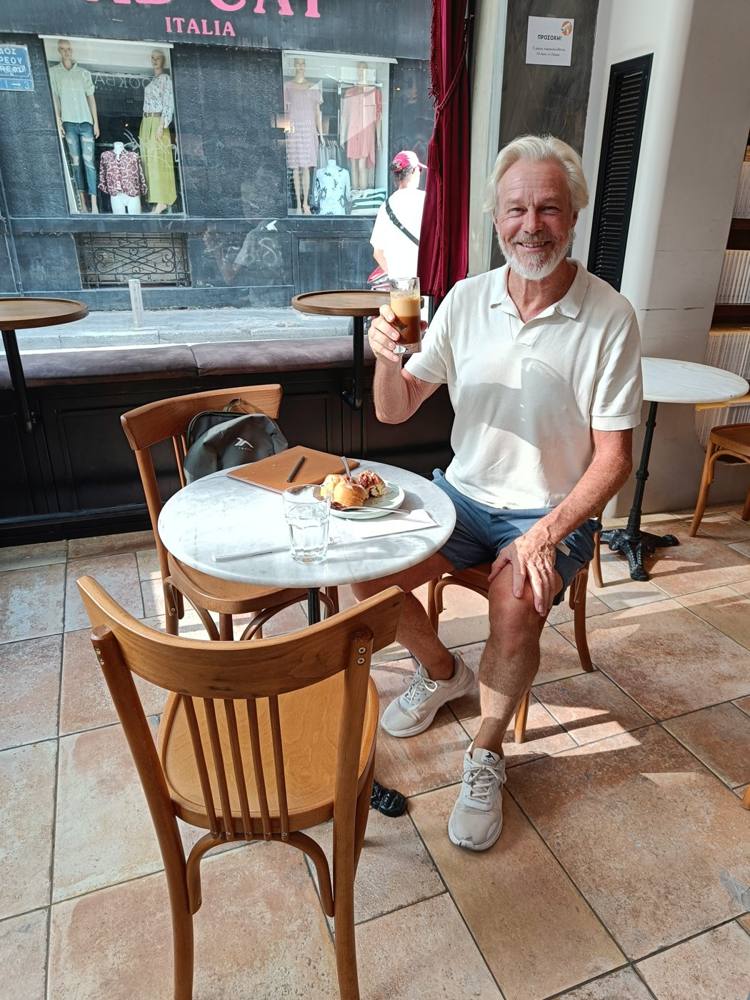
I stayed on Lefkosias street, north of the centre, and worked outward from there. Over three weeks I walked almost every neighbourhood in the city – the historic centre around Aiolou and Monastiraki, the Acropolis area, Kolonaki, Ilisia, and out well beyond them. I spoke with café owners, shopkeepers, drivers, teachers, professionals, people who left and came back, and people deciding whether to leave. Most conversations came out of the one before it – someone introduced me onward, which in this city is how you reach anyone at all.
The limits. Three weeks is short and I am a visitor. Most conversations were in English, so I heard more from the people who speak it – younger, better educated and more internationally connected than the city as a whole.
01 · Signal
belonging stops at the front door
Against the 17 Living Goals13 Belonging in an age of disconnection17 Belonging to a larger whole01 A life with dignity, for everyone
Belonging here is strong and small. It holds inside the family and stops, which leaves everything reaching past it with nothing to stand on.
Inside the family, nobody is left on their own – money, work, housing, care, all of it. Outside the family that support thins fast. Past the neighbourhood there is no support at all.
What I noticed
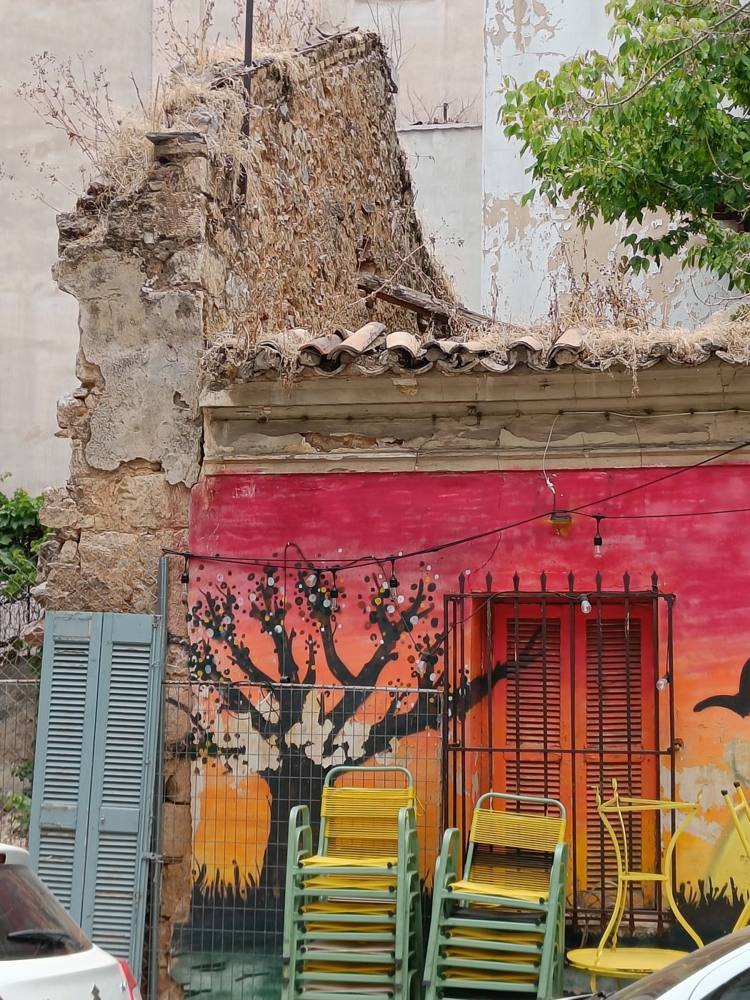
- A lot of people sleeping rough, begging and collecting waste on the main streets.
What people told me
"Family first, community second, country last."
"We all have the same problem, so we don't bother each other with it."
What kept coming up
Family was named as life's highest priority by almost everyone, first and without hesitation.
Asked who is responsible for the state of the city, nobody named themselves. Whatever is wrong with it is always another group's doing.
In most families somebody works for the state – said, more than once, in the same breath as saying the state cannot be trusted.
On immigration, unasked and without softening it: they are not the problem, and we try to help them.
On personal matters: you talk within the family, and not with outsiders. That principle shows up in small things too. Nobody fights over a parking space, because everybody is short of one.
What the context says
Confidence in Greek institutions, 2025
Trust in other people runs well above all of them. The widest gap of all is on whether people feel they have any say – 48 percentage points.
What this tells me
Athens has not lost its trust in people. It has narrowed it down to the people it already knows.
The boundary is not about who is foreign – the stranger who arrived last month with nothing is inside it, and the city council is not. It is about who is close.
Which leaves the people on the street. They are not outside the circle because of where they came from. They are outside it because nobody has met them, and a city organised around who you know has no answer for a person nobody knows.
A question worth asking
For you, wherever you are reading this:
how far out does your own sense of responsibility actually reach, and where does it stop?
02 · Signal
the inherited city
Against the 17 Living Goals02 Basic living conditions for everyone01 A life with dignity, for everyone
The floor holds, for the people who inherited one. Where you started decides whether you get it.
Ask an Athenian and Athens is cheap. Ask the data and it is one of the least affordable capitals in Europe against local wages. Both are true. The gap between them is the finding.
What I noticed
- Which neighbourhood you live in is asked early, and it is not small talk. It places you.
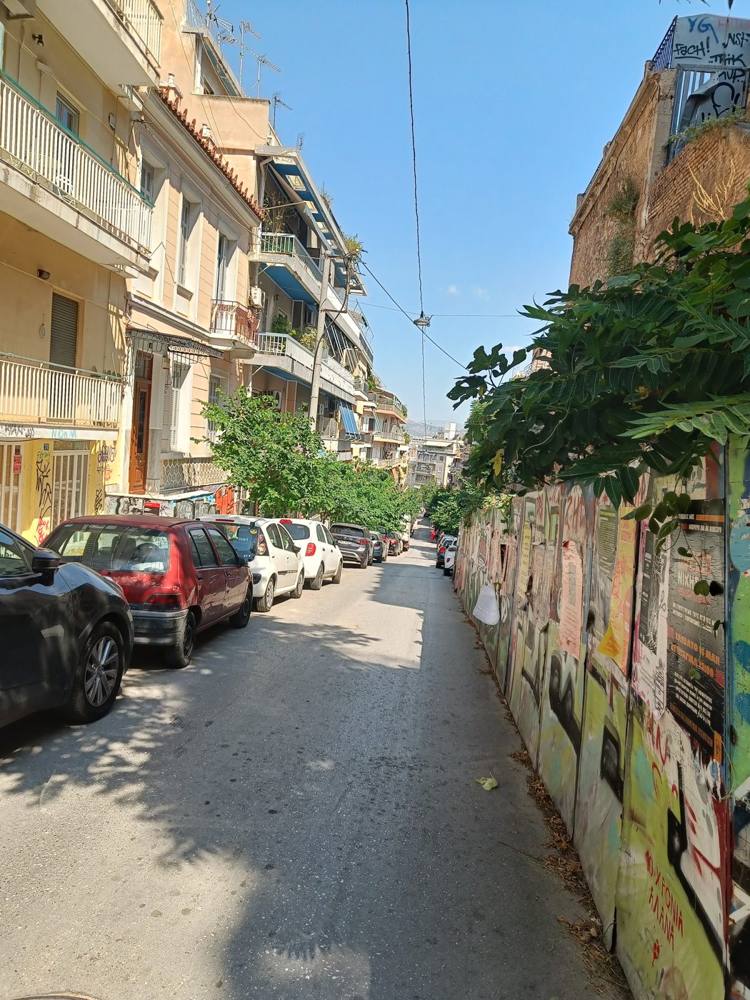
- New housing construction going up across the city.
What people told me
"The rich help the rich, the poor help the poor."
"The Riviera is a nice project, but not for the Greeks."
What kept coming up
The people who told me Athens is cheap were, without exception, people who own where they live. Flats pass from grandparents to parents to children, and some sit empty rather than being sold or let. Two or three properties per family came up repeatedly, always as an ordinary fact. A living house, a village house, a family house.
The same conversations included complaints about lost income.
What the context says
Rent as a share of average monthly pay
Greek rents rose 10.1% in 2025, second highest in the EU. Greece carries the highest housing cost overburden in the union. Foreign buyers accounted for close to 40% of residential transactions in Q2 2025.
What this tells me
Housing here is inherited, not bought – and inheritance does not answer to wages, interest rates or policy. It answers to who your grandparents were.
That is what makes the divide self-sealing. Property brings work, introductions and money, and all three stay inside the families that already have property.
A city can be affordable and unaffordable at once. Which one you live in was largely decided before you were born.
A question worth asking
For anyone arriving in Athens without family here:
what would it take to build a life without inherited property?
03 · Signal
thirty-four, and still at home
Against the 17 Living Goals02 Basic living conditions for everyone15 Progress that feels human
The basics are held – by the family, not by the country. The recovery shows in the figures and not in the day.
The family finds you somewhere to live and someone to hire you. That is Athens at its best. It is also why a thirty-four-year-old with a degree and a job is living in his mother's flat.
What I noticed
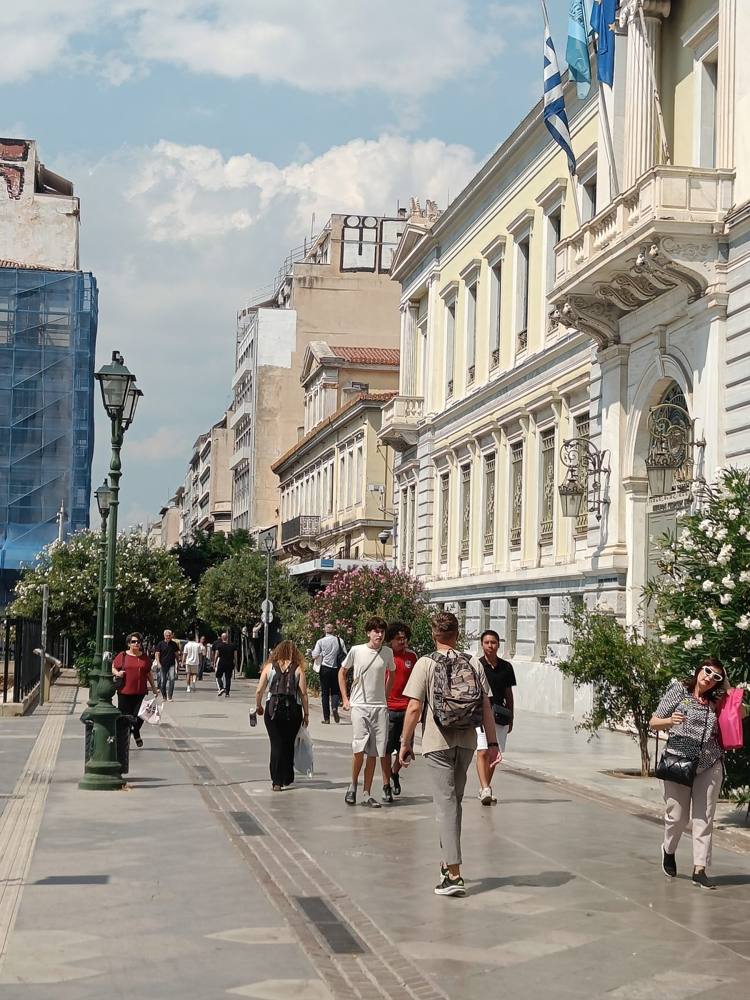
- Faces on the street set to getting through rather than getting on.
What kept coming up
Nobody I asked had a date in mind for moving out.
Staying in the family home into the thirties is unremarkable here, and both generations say so. I did not meet anyone who described any of it as a problem, and almost nobody could describe a future they were working towards. Parents described supporting adult children well into their thirties as an obligation rather than a burden – simply what you do.
Asked about the future, most answers were about getting through rather than getting on.
Those who left during the crisis and came back said they came back for family, the weather, and the Greek way of living. Nobody said opportunity.
What the context says
What a month costs against what a month pays
Youth unemployment stands at 18.4%, roughly double the national rate. The country is ageing, with deaths outpacing births.
What this tells me
Rent that cannot be met, a spare room that would otherwise stand empty, work that arrives through family, difficulty that stays inside it – each is reasonable on its own. Together they produce a generation that is housed, fed, employed, supported – and unable to start a life of its own. Moving out would mean stepping outside the only thing that reliably works.
The safety net is also the ceiling. The strongest family structure in Europe is producing the least independent generation in it, and neither generation sees it as a failure.
Nobody will call this a crisis. It moves too slowly, and from the inside it looks like love.
A question worth asking
For any parent reading this:
at what point does the spare room stop being a kindness?
04 · Signal
the life is right. the city is not
Against the 17 Living Goals03 Places built for humans06 A peaceful and safe life
Athens delivers the safety, the food and the company. It does not deliver the street to have them on.
Ask what Greek life is and you get the same answer everywhere: family, food, talking. Ask what the city is like and the answer changes completely. Both come from the same person, minutes apart.
What I noticed
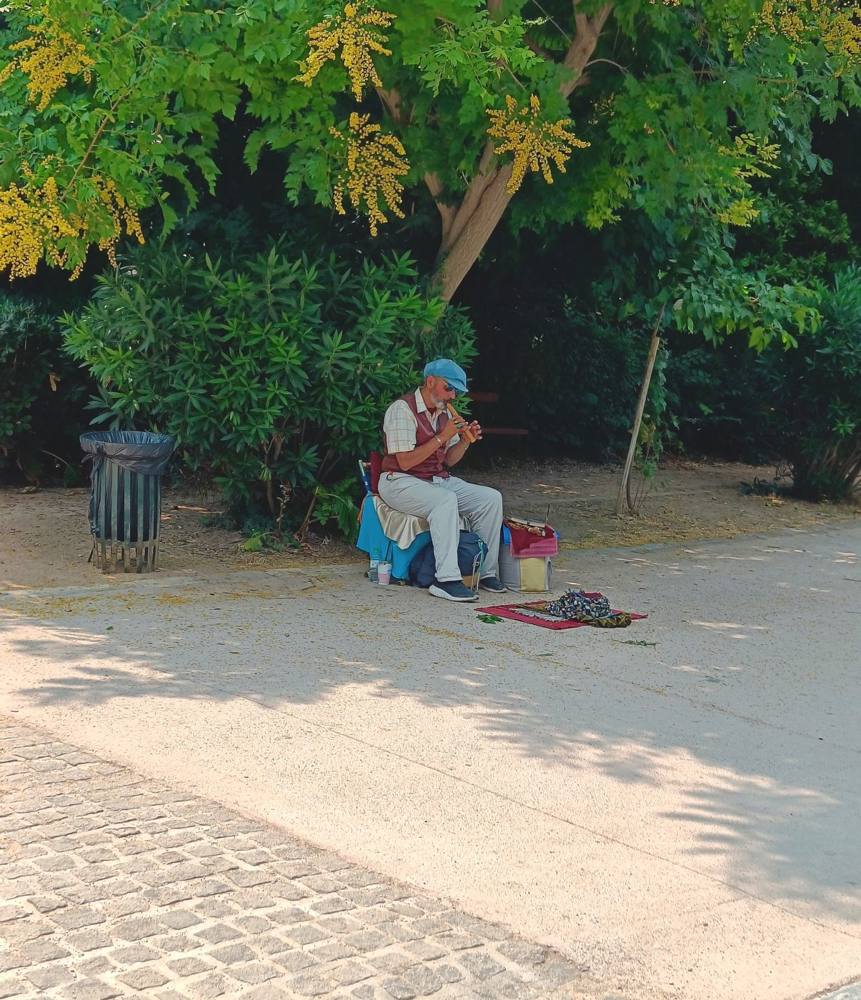
- Public life runs on cafés, terraces and neighbourhoods, and runs late.
- Public space is neglected: litter, minimal maintenance, almost no shade.
- The mountains and the sea are close. Neither reaches into the city.
- Transport within Athens works and is cheap; beyond it, barely exists.
- The city is safe. I never met aggression or felt unsafe, at any hour.
What people told me
"Greek life is a good life: family, food, talking."
"Athens needs more green, and more agoras."
What kept coming up
Asked what Greek life is, everyone answered almost identically – warm, and staying on the surface. Asked what any of it means in practice, most could not say.
Asked about the city they actually live in, the answers changed completely. Concrete. Traffic. Nothing maintained. Nowhere to sit.
The wish list was consistent: quiet, bikes and pedestrians instead of parking, somewhere for art and culture.
The young professionals compared the day here with London – the commute, the pace, the hours that go missing. Athens gives you the day back. They meant it. It only came up because I raised the comparison; nobody named it as something good about Athens on their own.
What the context says
Public green space per resident
Central Athens is the second most densely populated area in Europe after Paris.
What this tells me
The food and the company hold up. You can see both from any pavement. The rest describes an ideal rather than a day – named instantly, and then impossible to say what it looks like in practice.
An ideal nobody can describe in practice is usually one that is remembered rather than lived.
The city gives one thing back. You can walk it at any hour without fear, which is not nothing in a European capital. It gives very little else: no green, no maintenance, nowhere to sit.
Athens knows exactly what a good life looks like. It has built a city where you cannot quite have one.
A question worth asking
For the city's planners:
what would you build if the job were to make room for the life Athenians already describe?
05 · Signal
long hours, no way up
Against the 17 Living Goals07 Work that supports life, not drains it09 A fair exchange for your time
Long hours, low return, and nothing above the job to move into.
Work here is a family shop or a multinational. There is very little in between, and in between is where a career normally starts and evolves.
What I noticed
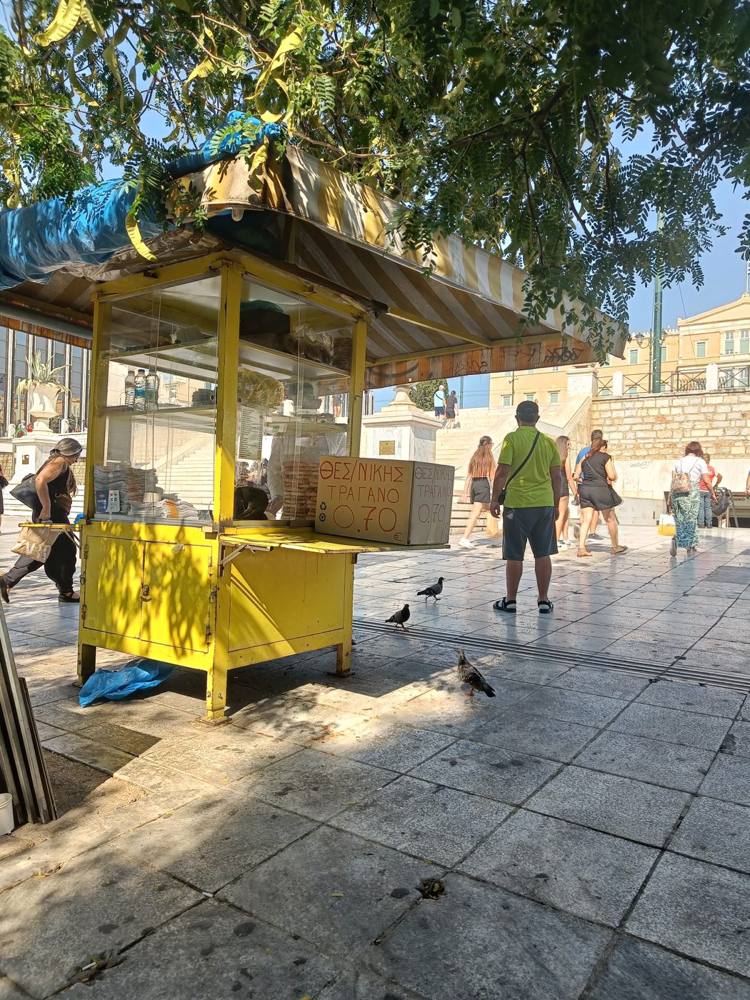
- Street after street of small shops and food retail, one after another.
- Small traders working alone: a kiosk, a counter, one person on it from morning to night.
What people told me
"It is who you know."
"Outside Athens it is hospitality or farming."
What kept coming up
Jobs are found through people, not applications, and a meeting in person still counts for more than anything online. Several people said they had considered starting a business and took a job instead. The reasons were always administrative: permits, paperwork, tax. Never the market.
The other way round it is to work outside the official channels altogether. The black market is still there, and nobody described it as unusual.
On the tax reduction offered to young professionals – welcome, and nowhere near enough on its own. Healthcare, housing and childcare were named as what would actually move someone.
The only other city named was Thessaloniki, and always with a maybe attached.
What the context says
Actual hours worked per week
A law allowing a 13-hour day came in six months before I arrived, and nobody raised it. The minimum wage is €920 gross a month.
What this tells me
Athens works longer for less than almost anywhere in Europe, in an economy of family shops where the working day has no edge to stop at and nothing above it to move into.
A country can recover economically and still have no work at that level for the people it trained. Greece pays for the training and another country collects the return – and it has been doing so for long enough that the ones who came back have no colleagues their own age.
A question worth asking
For Athenians under thirty:
what would make you decide to stay?
the four pillars
The seventeen goals group into four: Live Good, Work Good, Feel Good, Do Good. Read against them, Athens gives the same answer four times.
The same shape turns up in all four: what is near holds, what is shared is missing.
live good
- What holds:
- a roof, and someone who will not let you fall.
- What is missing:
- the street to live on – no green, little maintenance, nowhere to sit.
- Covering it:
- the family, with a flat that came down through it.
work good
- What holds:
- work, found through people.
- What is missing:
- the middle of the economy, and with it any step above the job you have.
- Covering it:
- the family again, hiring its own.
feel good
- What holds:
- the food, the company, the safety to walk at any hour.
- What is missing:
- a future anyone can describe.
- Covering it:
- nothing. This is where the substitution runs out.
do good
- What holds:
- care, as far as the edge of the family.
- What is missing:
- everything past it. Asked who is responsible for the state of the city, nobody named themselves.
Athens is strong wherever life is private and thin wherever it is shared. On three of the four the family is doing work the city is not, and doing it well enough that nobody calls it a shortage.
The fourth is the one to watch. A future is the one thing a family cannot hand down.
what I could not settle
Three weeks is enough to notice things and not enough to be sure of them. These stayed open.
Are Greeks actually as hospitable as everyone says? The warmth is there and real. Whether it lasts past the first meeting, and who gets it, I could not tell. The reputation may be taking credit for warmth that stops at the second meeting.
Are people actually happy here? Everyone says the life is good. Faces on the street say something different. Both readings are mine, from outside, and one of them is probably wrong.
Is philotimo lived, or inherited? Greeks name a set of values, philotimo above all, and outsiders repeat them admiringly. Some of what I was told describes how people would like to behave rather than how the city actually runs. I could not tell which parts are practised and which are simply passed on.
How much unemployment is hidden? If most families have someone working for the state, and the state has historically hired for reasons other than need, the published figure and the real one may be some distance apart.
where this points
Five signals and nothing else would be a dead end. So this last part asks what they point to. It is not part of the reading, it does not carry the same weight, and Athens will know things I cannot. It is here to be argued with, which is more use than another description of the problem.
1The economy has only two floors
At the bottom, the family shop – a kiosk, a counter, one person on it from morning to night. At the top, the multinational and the state. Very little in between, and in between is where a career normally starts. That is the mechanism underneath three of the five signals. It means this is not really an economic problem. It is a question of who gets to stay.
The missing floor is the mid-sized employer – fifty to five hundred people, graduate work, a job with a next step in it. Those do not come from tax breaks. They grow around an anchor, and they grow fastest when the anchor is a place rather than a building. Which is what makes the two concepts below worth more than they first look. Neither is a culture project. Both hire at exactly the level Athens is losing, and both would still be hiring in twenty years.
2Greece treats its best assets as scenery
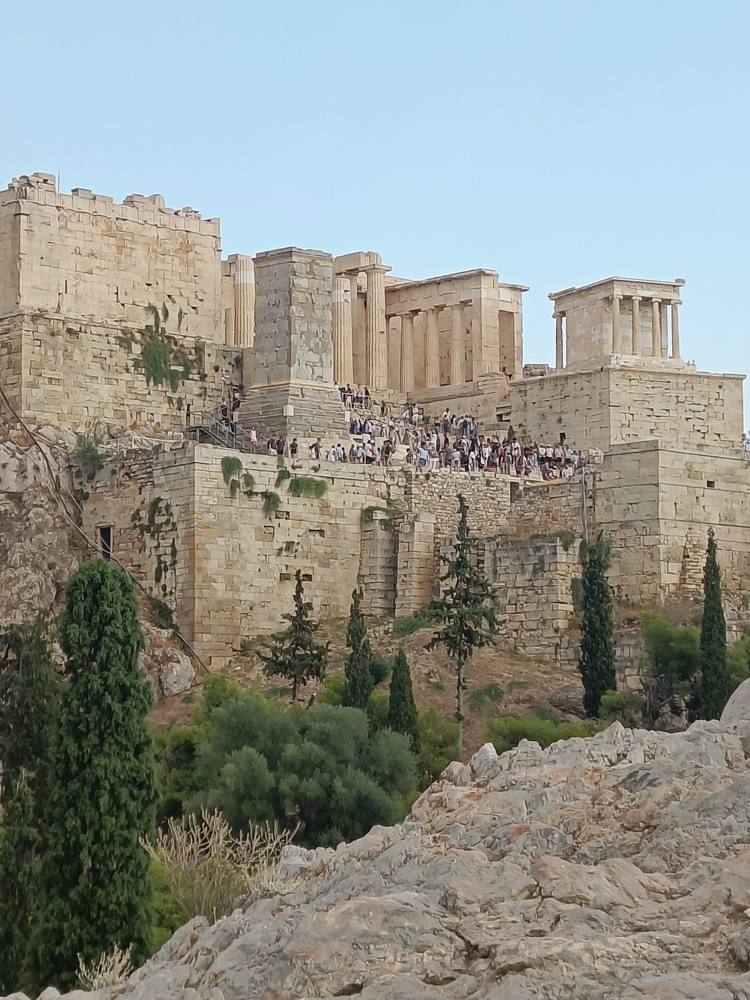
Philosophy, medicine, sport, food, the habit of eating together – the handful of things the country is known for everywhere. Each one is shown as history. A visitor looks at it for an afternoon and then leaves. You can come and look at all of it. You cannot come and learn it. Taught instead of displayed, the same material changes what Athens is for.
So here are two anchors of the kind the last point asked for. Neither exists yet. Neither needs anything Athens does not already have – the clinicians, the climate, the food, and the ruins of the first one ever built.
Both are worked out at businesshippie.club/quality-of-life-solutions.
3Nobody owns the question
Athens has the documents – a resilience strategy to 2030, a climate action plan, a mobility law. Nobody I spoke to mentioned one. A plan nobody can name is not doing the work of a plan. The missing piece is not another strategy. It is one question, asked out loud once a year by a body with its name against the answer: where should Athens be in ten years, and what did we do about it this year? Published in language a shopkeeper would read.
That is also what neither concept has. Both need education, government and business moving as one, and there is nobody in Athens whose job it is to make that happen.
closing reflection
Athens is not short of resilience. It has an abundance of it.
That resilience deserves recognition, and it deserves a successor. Fifteen years of getting through has made Athens very good at getting through. It has not helped it decide where to go. Nobody I met could describe what Athens wants to become. More than one could not describe what they wanted for themselves either.
The question that stayed with me was not whether Athens will recover. It has. It is whether the dreamers and doers are still here. I think they are, and I did not meet them.
thank you
This reading exists because people gave me their time and their honesty, usually over coffee, usually with nothing to gain from it.
Thank you to everyone in Athens who sat down with a stranger and answered questions about their own life without flinching – the café owners, the teachers, the drivers, the shopkeepers, the young professionals, the people who have stayed and the people who are deciding whether to.
Thank you to those who introduced me onwards, which in this city is the only way anything happens.
Nothing here would exist without you. If I have read you wrong, that is mine.
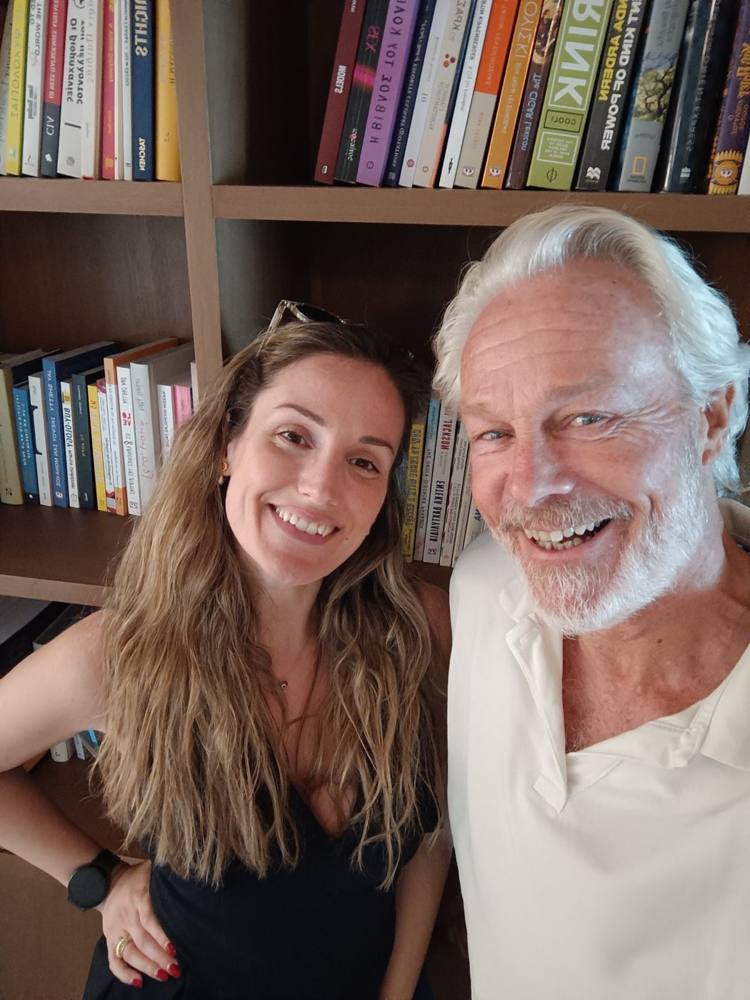
 Hans van de Rakt · Business Hippie Club
behind this reading
I looked at Athens through the 17 Living Goals – seventeen things a good life needs, set out at the top of this reading.
I went through all seventeen, one at a time, and asked where Athens sits on each. Most of what came back was ordinary. Five patterns kept turning up, and each of them touched two or three goals at once. Those five are the signals in this reading.
The goals are free to use, with credit: businesshippie.club/the17livinggoals
Read the Athens City Report – all seventeen goals, the evidence behind each signal, and what I still need to find out.
See the QOL creations – concepts like the two above, worked out properly, at businesshippie.club/quality-of-life-solutions